Showing posts with label war. Show all posts

Thursday, September 21, 2006

Refuse terror - choose life!

From Bruce Schneier's Crypto-Gram newsletter comes some good advice.
“I'd like everyone to take a deep breath and listen for a minute.

The point of terrorism is to cause terror, sometimes to further a political goal and sometimes out of sheer hatred. The people terrorists kill are not the targets; they are collateral damage. And blowing up planes, trains, markets, or buses is not the goal; those are just tactics. The real targets of terrorism are the rest of us: the billions of us who are not killed but are terrorized because of the killing. The real point of terrorism is not the act itself, but our reaction to the act.

And we're doing exactly what the terrorists want. ”
When terrorists can affect an election result, when they stop a holiday destination from attracting tourists, when we'd rather stay at home than travel abroard, when we look askance at people of "middle-eastern" descent ... then they have won a small victory. Let us remember, they are not soldiers, fighting for a specific state, they are terrorists, they cannot win our land - but they can batter our spirit, poison our hearts and spread the cancer of their evil philosophy.


Some commentators seem to acknowledge this, but want to not look at taking preventative measures - personally I think we need to walk the fine line between adapting to the new tactical security landscape, and refusing to be affected by terrorism. What does Bruce say?
“But our job is to remain steadfast in the face of terror, to refuse to be terrorized. Our job is to not panic every time two Muslims stand together checking their watches. There are approximately 1 billion Muslims in the world, a large percentage of them not Arab, and about 320 million Arabs in the Middle East, the overwhelming majority of them not terrorists. Our job is to think critically and rationally, and to ignore the cacophony of other interests trying to use terrorism to advance political careers or increase a television show's viewership.

The surest defense against terrorism is to refuse to be terrorized. Our job is to recognize that terrorism is just one of the risks we face, and not a particularly common one at that. And our job is to fight those politicians who use fear as an excuse to take away our liberties and promote security theater that wastes money and doesn't make us any safer.”
We've certainly seen enough "security theatre" in the Australian political landscape. Personally I believe in the government's words a bit more than the opposition - if only because they are expected to back them up with action. I think that Prime Minister John Howard does an interesting job of portraying the image of a steadfast, unworried leader - yet he is accused of promoting fear and division within Australia. That might be politics warring with personality - but I find my own reaction is somewhat similar. I want to remain unmoved, yet I find myself questioning why certain issues were either ignored, or swept under the carpet in years gone by - decisions that seem now to be foolhardy.

Friday, September 15, 2006

Citizen vs Tribesman

America's ABC has an interesting article on Why We Will Never See Democracy in the Middle East. Steven Pressfield says the key is the longstanding conflict between the mindset of 'citizen' and 'tribesman'.
“What exactly is the tribal mind-set? It derives from that most ancient of social organizations, whose virtues are obedience, fidelity, warrior pride, respect for ancestors, hostility to outsiders and willingness to lay down one's life for the cause/faith/group. The tribe's ideal leader is closer to Tony Soprano than to FDR and its social mores are more like those of Geronimo's Apaches than the city council of Scarsdale or Shepherd's Bush.”
He makes a particular point about how the citizen takes part in war, but the tribesman takes revenge:
“The tribesman does not operate by a body of civil law but by a code of honor. If he receives a wrong, he does not seek redress. He wants revenge. The taking of revenge is a virtue in tribal eyes, called badal in the Pathan code of nangwali. A man who does not take revenge is not a man. Al Qaeda, Hezbollah, and the sectarian militias of Iraq are not in the war business, they are in the revenge business. The revenge-seeker cannot be negotiated with because his intent is bound up with honor. It is an absolute.”
If true, then that places the War on Terrorism not within the religious grounds of Christianity vs Islam, nor within the political arena of Democracy vs Theocracy, but on the more philosophical grounds of State vs Tribe - or from the terrorists' view, of personal revenge.

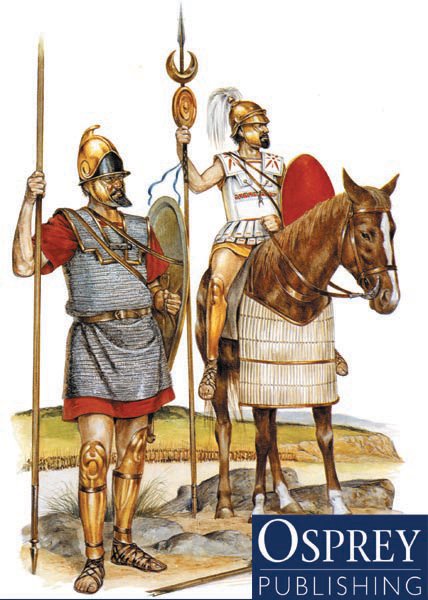
I think that there is clear example of citizens winning this war once before ... Australia's ABC aired an interesting documentary last night called Carthage: The Roman Holocaust that looked at how Carthage was copied, and eventually surpassed, by Rome. The point made was that Rome took the advanced culture, agriculture and trading routes of the Carthaginians and added an extra element - the cult of the Republic. Suddenly people who were once Roman enemies, came to see themselves as Roman citizens, and part of what their ancestors once fought. Historian Richard Miles points to the baths, the theatre and the temple as the tools Rome used to bind newly conquered peoples to the idea of citizenship.

Carthaginian Veterans

Is there a lesson in this for our conflict with the tribesmen of the Middle East, or closer to home, the Solomon Islands?

via Chaos Manor's RSS feed

Monday, August 28, 2006

Further on Lebanon

Further to yesterday's post, Dogfight At Bankstown points out some interesting information. As he says:
“One thing about this Hezbollah-Hamas-Israeli conflict: It certainly has exposed more that it has conquered.“””

Wednesday, July 26, 2006

BBC Editors: The statistics of war

I found this a bit shocking, so take this as a warning that this post might give your heartburn ... Craig Oliver on the BBC's The Editors blog points out some disturbing statistics:
“• Around 30 to 40 people are killed every day in the current Israel/Lebanon conflict.

• About 100 people are killed every day in the violence in Iraq.

• And 1,200 people are killed every day in the war in the Congo.

All three of these stories are due to appear on tonight's Ten O'Clock News. They will probably run in that order - with the Middle East getting by far the most attention.

Does this say something about how we value human life? It's a fair question and one I worry about.”
Wow. That really makes you stop and think, doesn't it. After all, we worry about World War III breaking out because of the crisis in Lebanon, and look with horror on the images coming out of there and Iraq, but what the hell is happening in the Congo?! Where is our humanity?

I guess some of the problem comes down to the old Kirk/Spock dilemna ... in the original series of Star Trek, Captain Kirk would always conflict with his Science Officer, Spock, because he would invariably put the good of many people at risk in order to save the life of the few - based usually on the strength of the relationship he had with the few (usually Spock).

Spock would always lament such “illogical” behaviour, yet you always felt like you wanted to cheer Kirk on, and his choices seemed eminently reasonable. I think it is our tribal nature, our preference to favour the known over the unknown, that leads us this way. In that light, the conflict in Lebanon seems much more real because we are more familiar with its history (often from a biblical sense) than we are with the Congo. The media's bias in reporting is based on this, but it also serves to continue to feed this preference as it focuses on the conflict there to the preference of others.

Here is Craig Oliver's reasoning behind the order of stories:
“The Middle East needs more time and space for a variety of reasons:

• The sheer complexity of the situation requires space to help provide context and analysis.

• The current conflict plugs into so many other stories around the world, from what Tony Blair and George W. Bush call the "War on Terror", through to the price of oil, even the situation in Afghanistan.

• Many people fear the consequences of conflict in the Middle East more than anywhere else, and it is our job to help people understand a "scary world".

In short, our judgement is that Middle East is currently the biggest story in the world - by a wide margin - and it has the greatest implications for us all.”
Certainly the conflict in Lebanon repeats themes that are central to the War on Terror coverage - with terrorist attacks by Muslim militia, excessive retaliatory attacks by conventional military forces, the use of civilians as 'cover' and accusations of interference by foreign states by both sides. Yet the ongoing conflicts in Congo should not be ignored or put aside for that reason. Wikipedia has this to say about the conflict:
“For the next several years, even as the Second Congo War wound to an official end, a low level conflict continued in Ituri, with tens of thousands more killed. Half of the milita members are under the age of 18 and some are as young as eight. The continued conflict has been blamed both on the lack of any real authority in the region, which has become a patchwork of areas claimed by armed militias, and the competition among the various armed groups for control of natural resources in the area. In response, the United Nations directed its MONUC peacekeepers to carry out aggressive disarmament exercises against local milities.”
In some ways that is an even easier situation to resolve, yet we don't see Condoleeza Rice flying into the Democratic Republic of Congo for peace talks. There aren't regular newscasts from embedded reporters showing us what is going on, or how the global prices of gold will be affected by further conflict, or a sudden outbreak of peace ...

If conventional media want to find any unique role to play in this new wired world, then this is it - they can highlight conflicts and issues that may have little 'pull' on our tribal nature, but that are important and vital items to address and think about. Bloggers may (like I have) spend some small time talking about these issues, but unless someone goes there and helps make it real for the average punter by putting it front and center in the daily news, we won't get the sort of public awareness that moves governments to act resolutely to affect change*.

Without such action we lose our souls to self-absorbed, reality TV drivel, that plays screeching chords upon our most intense tribal reflexes, yet leaves critical issues in the real world untouched, unloved and ignored. I can imagine such a situation all too easily; as Agent K in Men in Black says:
“A person is smart. People are dumb, panicky, dangerous animals, and you know it.”
Conventional media is still one of the few ways you can really reach out to individual persons en masse (just ask advertisers), we must therefore ask that news editors take these things (i.e. like those statistics) that they may well know, and introduce them to us in our daily news, current affairs or even (gasp!) newspapers. They may not help us relax, or escape the daily grind, but they will help us appreciate what is really happening out there in the world beyond ourselves.

* Some people might point out that we have issues closer to home to worry about, and it is true we do have issues like youth suicide, indigenous health and water use - but they pale in comparison to 1,200 people dying per day.

Thursday, January 12, 2006

Good News from Iraq

Sometimes you just want to read some good news, and there are some great articles on the USA's House Armed Services Committee - Building Freedom in Iraq and Afghanistan page. This may not be the stuff that 'makes it' in our conventional news media, but it is nice to see for a change.

Wednesday, November 17, 2004

Iraqi Soldiers - "We have been silent enough."

The Washington Post has an interesting article (registration required) interviewing some of the Iraqi soldiers fighting in Fallujah.

Here are some quotes from the article:
For Mustafa, one of 2,000 Iraqi soldiers fighting alongside U.S. troops for control of this insurgent-occupied city, the battle for Fallujah was personal. If the fighters continue to control Iraqi cities, there will be no future for him, his children or his wife of 10 weeks.

"She has to know I am doing this for her," Mustafa said Sunday from an Iraqi base camp near Fallujah. "I want my wife to go shopping without fear. This is the goal of this operation, to help the Iraqis get rid of fear. It is worth it to be away from home."
Fallujah is being destroyed (mainly because of the way the insurgents are fighting). It's interesting to see these soldiers say why they are there (emphasis mine):
After a week of fighting, Mustafa said, Fallujah was in ruins. Houses were destroyed, buildings burned and bodies of insurgents scattered in the streets.

"Nothing in this city is like it was before," he said.

"Don't look to the destruction," a soldier standing next to Mustafa said. "Look at the future of the city without terrorists."

...

"If we could control Fallujah and defeat the terrorists in the city, all Iraq will stabilize," Mustafa said. "I've seen nightmares for the last few days, all about the fighting in Fallujah, but when I think of the results, I feel better."

...

He said he would never think about giving up now, not when his country needed him. "If I don't try and others don't, those rats will spread with their diseases," he said. "We have been silent enough."

Tuesday, July 29, 2003

Communique from the Iraqi Front

Here's an interesting Communique from the Iraqi Front. Nice to see they're morale's up. I probably don't agree with every sentiment expressed here, but it's hard to not like these guys.

Thursday, May 08, 2003

Management and mismanagement of diversity

Here is something worth reading Management and mismanagement of diversity
The case of ethnic conflict and state-building in the Arab World
.

The piece's conclusion is below:
"In conclusion, the way out of the present dilemmas of all Arab states, but especially those with marked ethnic diversity, is a triangular formula of civil society, democracy, and federalism. This strength would be further enhanced by regional peace and economic cooperation. In the mid 1990s, all the ingredients are present. It only needs political imagination and the political will of new leadership to skilfully engineer those ingredients together into a harmonious regional mosaic."

Well that sure looks like what the coalition has tried to kickstart with their ousting of Saddam's regime.