Showing posts with label Middle East. Show all posts

Thursday, September 21, 2006

Refuse terror - choose life!

From Bruce Schneier's Crypto-Gram newsletter comes some good advice.
“I'd like everyone to take a deep breath and listen for a minute.

The point of terrorism is to cause terror, sometimes to further a political goal and sometimes out of sheer hatred. The people terrorists kill are not the targets; they are collateral damage. And blowing up planes, trains, markets, or buses is not the goal; those are just tactics. The real targets of terrorism are the rest of us: the billions of us who are not killed but are terrorized because of the killing. The real point of terrorism is not the act itself, but our reaction to the act.

And we're doing exactly what the terrorists want. ”
When terrorists can affect an election result, when they stop a holiday destination from attracting tourists, when we'd rather stay at home than travel abroard, when we look askance at people of "middle-eastern" descent ... then they have won a small victory. Let us remember, they are not soldiers, fighting for a specific state, they are terrorists, they cannot win our land - but they can batter our spirit, poison our hearts and spread the cancer of their evil philosophy.


Some commentators seem to acknowledge this, but want to not look at taking preventative measures - personally I think we need to walk the fine line between adapting to the new tactical security landscape, and refusing to be affected by terrorism. What does Bruce say?
“But our job is to remain steadfast in the face of terror, to refuse to be terrorized. Our job is to not panic every time two Muslims stand together checking their watches. There are approximately 1 billion Muslims in the world, a large percentage of them not Arab, and about 320 million Arabs in the Middle East, the overwhelming majority of them not terrorists. Our job is to think critically and rationally, and to ignore the cacophony of other interests trying to use terrorism to advance political careers or increase a television show's viewership.

The surest defense against terrorism is to refuse to be terrorized. Our job is to recognize that terrorism is just one of the risks we face, and not a particularly common one at that. And our job is to fight those politicians who use fear as an excuse to take away our liberties and promote security theater that wastes money and doesn't make us any safer.”
We've certainly seen enough "security theatre" in the Australian political landscape. Personally I believe in the government's words a bit more than the opposition - if only because they are expected to back them up with action. I think that Prime Minister John Howard does an interesting job of portraying the image of a steadfast, unworried leader - yet he is accused of promoting fear and division within Australia. That might be politics warring with personality - but I find my own reaction is somewhat similar. I want to remain unmoved, yet I find myself questioning why certain issues were either ignored, or swept under the carpet in years gone by - decisions that seem now to be foolhardy.

Friday, September 15, 2006

Citizen vs Tribesman

America's ABC has an interesting article on Why We Will Never See Democracy in the Middle East. Steven Pressfield says the key is the longstanding conflict between the mindset of 'citizen' and 'tribesman'.
“What exactly is the tribal mind-set? It derives from that most ancient of social organizations, whose virtues are obedience, fidelity, warrior pride, respect for ancestors, hostility to outsiders and willingness to lay down one's life for the cause/faith/group. The tribe's ideal leader is closer to Tony Soprano than to FDR and its social mores are more like those of Geronimo's Apaches than the city council of Scarsdale or Shepherd's Bush.”
He makes a particular point about how the citizen takes part in war, but the tribesman takes revenge:
“The tribesman does not operate by a body of civil law but by a code of honor. If he receives a wrong, he does not seek redress. He wants revenge. The taking of revenge is a virtue in tribal eyes, called badal in the Pathan code of nangwali. A man who does not take revenge is not a man. Al Qaeda, Hezbollah, and the sectarian militias of Iraq are not in the war business, they are in the revenge business. The revenge-seeker cannot be negotiated with because his intent is bound up with honor. It is an absolute.”
If true, then that places the War on Terrorism not within the religious grounds of Christianity vs Islam, nor within the political arena of Democracy vs Theocracy, but on the more philosophical grounds of State vs Tribe - or from the terrorists' view, of personal revenge.

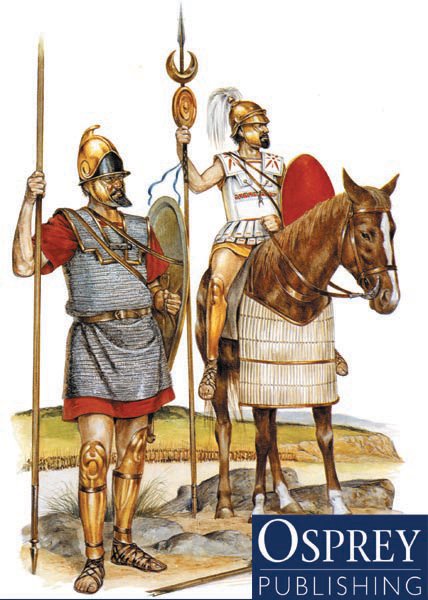
I think that there is clear example of citizens winning this war once before ... Australia's ABC aired an interesting documentary last night called Carthage: The Roman Holocaust that looked at how Carthage was copied, and eventually surpassed, by Rome. The point made was that Rome took the advanced culture, agriculture and trading routes of the Carthaginians and added an extra element - the cult of the Republic. Suddenly people who were once Roman enemies, came to see themselves as Roman citizens, and part of what their ancestors once fought. Historian Richard Miles points to the baths, the theatre and the temple as the tools Rome used to bind newly conquered peoples to the idea of citizenship.

Carthaginian Veterans

Is there a lesson in this for our conflict with the tribesmen of the Middle East, or closer to home, the Solomon Islands?

via Chaos Manor's RSS feed

Monday, August 28, 2006

Further on Lebanon

Further to yesterday's post, Dogfight At Bankstown points out some interesting information. As he says:
“One thing about this Hezbollah-Hamas-Israeli conflict: It certainly has exposed more that it has conquered.“””

Friday, August 25, 2006

Photos from Lebanon: Propaganda or Journalism?

During the War in Lebanon, we were given a nightly bombardment of shocking images of the toll taken on the Lebanese people. This continued during the day as the press ran with disturbing photos of the dead and dying, and the aftermath of war. Some small mention was made of the photoshopped smoke clouds that Reuters' bought from one of their contract photographers, Hajj.

But at the same time, alternative media outlets like Zombietime and Little Green Footballs have been unearthing some shocking irregularities in the War in Lebanon images that Reuters, AP and other newswire services have been shopping around. The LA Times picked up on this two weeks ago:
““”There's more, and it's worth your time to take a look. That's one of the undeniable strengths of the Internet and of the blogosphere, and the fact that it is being employed to help keep journalism honest ultimately is to everybody's benefit.

What the major news organizations ought to be doing is to make their own analysis of the images coming out of Lebanon and if, as seems more than likely, they find widespread malfeasance, some hard questions need to be asked about why it occurred. Some of it may stem from the urge every photographer feels to make a photo perfect. Some of it probably flows from a simple economic imperative — a freelancer who produces dramatic images gets picked up more and paid more. Moreover, the obscenely anti-Israeli tenor of most of the European and world press means there's an eager market for pictures of dead Lebanese babies.”
At least Andrew Bolt is making a fair bit of noise on his blog (and here) about the Australian press' silence on their being taken in by the Hezbollah ambulance hoax.

Reuters has addressed some of these issues on their blog, but by and large they have only concerned themselves with photos that are blatantly and undeniably false. Their corrections page mentions that Hajj was posting straight to the Global News desk and not via a photo editor - a practice they claim to have tightened up on, but that does not address the root cause of many of these issues - which is that Hezbollah is blatantly manipulating the media - and getting away with it!

Finally, some fun has been poked at those who have accepted the fake images:

Thursday, May 08, 2003

Management and mismanagement of diversity

Here is something worth reading Management and mismanagement of diversity
The case of ethnic conflict and state-building in the Arab World
.

The piece's conclusion is below:
"In conclusion, the way out of the present dilemmas of all Arab states, but especially those with marked ethnic diversity, is a triangular formula of civil society, democracy, and federalism. This strength would be further enhanced by regional peace and economic cooperation. In the mid 1990s, all the ingredients are present. It only needs political imagination and the political will of new leadership to skilfully engineer those ingredients together into a harmonious regional mosaic."

Well that sure looks like what the coalition has tried to kickstart with their ousting of Saddam's regime.